Laundry loop · steady state
How many pairs do you actually need?
Running out is not a sign you bought too few. It is a sign the loop is too slow. How often the washing happens decides how many pairs the drawer has to hold — not the other way round.
Set your wash frequency on the dial. The requirement moves while you drag it.
We work out how many. Where you get them is not our business.
- Nothing to upload. This service accepts no images at all.
- The arithmetic runs in your browser and can be checked.
- No account needed to move the dial.
Steady state of your loop
Washes about a week apart, at 10 pairs worn a week, drying on an indoor airer.
Drag it. Watch the number you need move.
Right now
Once a week
Plain list
Where the pairs are
The same figures as the dial, in words, because a ring on its own is not readable by everyone.
- On your feet1 pair
- In the basket5 pairs
- In the machineunder 1
- Drying2 pairs
- In the drawer8 pairs
The part nobody counts
The number you own is not the number you can wear.
Out of the drawer right now
8
of 16 pairs, on an ordinary weekday, for someone who washes once a week and dries on an airer. Leaving 8 you can actually put on.
A drawer that looks full can still fail you on a Thursday morning. Everything worn since the last wash is in the basket. Everything washed last night is still damp. On the day you do the laundry, the number available is close to zero.
Of 16 pairs, on an ordinary day about 8 are somewhere other than the drawer — 1 pair on your feet, 5 pairs in the basket, 2 pairs still drying. You are effectively running on 8. This is the part almost nobody counts, and it is why a drawer that looks full still runs out.
What most people count
16
Pairs owned. The figure in the drawer when everything is clean at once, which is a state that almost never occurs.
What you are running on
8
Pairs in the drawer on a normal day. This is the number that decides whether you run out, and it is the one nobody works out.
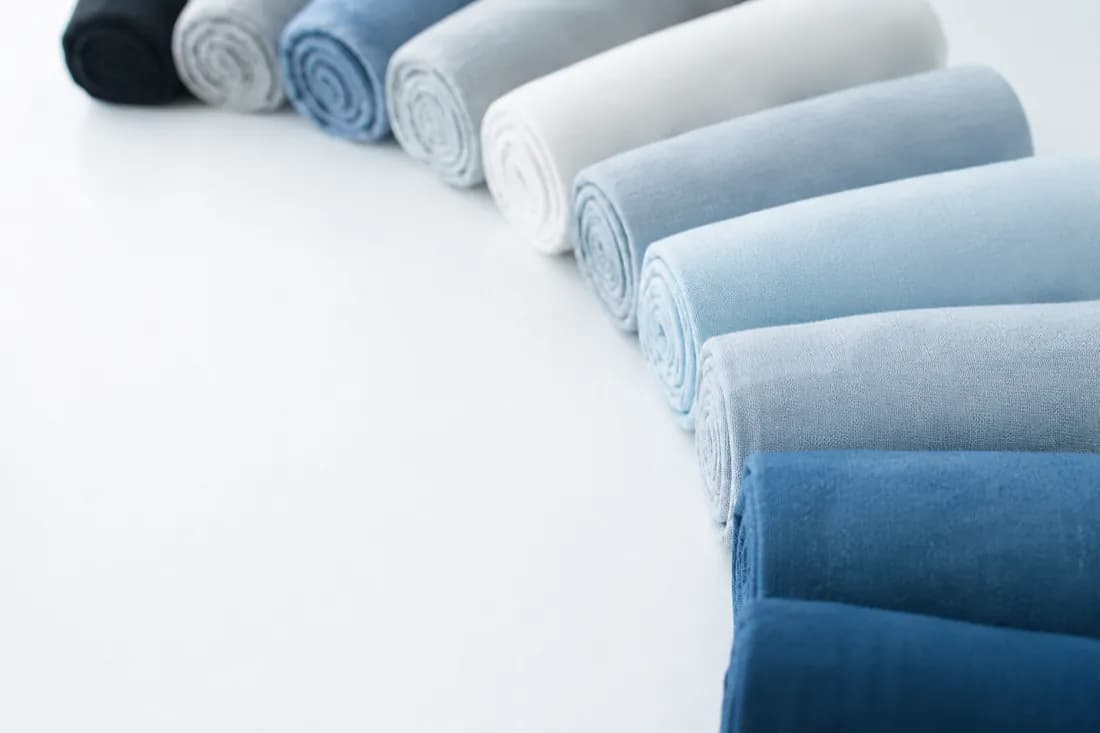
Three steps
Say how the washing really goes. Read the loop. Take the number.
Under a minute, and nothing is uploaded at any point.
 01
Set the rhythm
Wash frequency, the days you actually wear a pair, the sessions that need a second one, and how things dry. All of it is a choice from a list — there is nothing to type and nothing to send us.
 02
Read the loop
The dial fills with the steady state: pairs on your feet, in the basket, in the drum, on the airer, and the highlighted arc of the ones you can wear right now.
 03
Take the number
A range to keep, a buffer with a reason attached, when the set will need looking at, and the two routes out — buy more, or wash more — costed side by side.
Five places a pair can be
One loop, five stops. Only the last one is wearable.
How long a pair sits in each stop is what sets the size of the whole loop. The slowest stop is almost always the one that is not the machine.
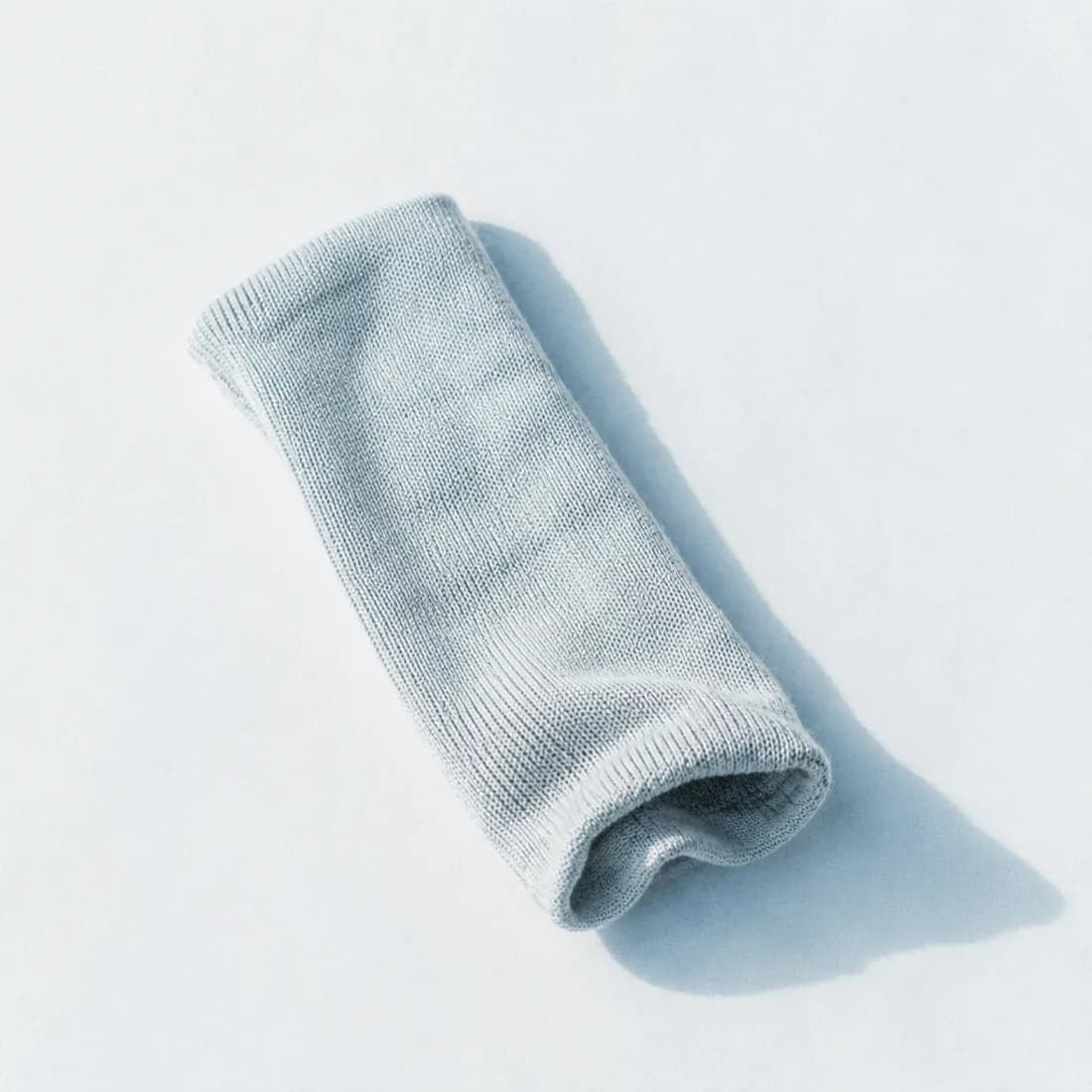
On your feet
1Sits here for about half a day.
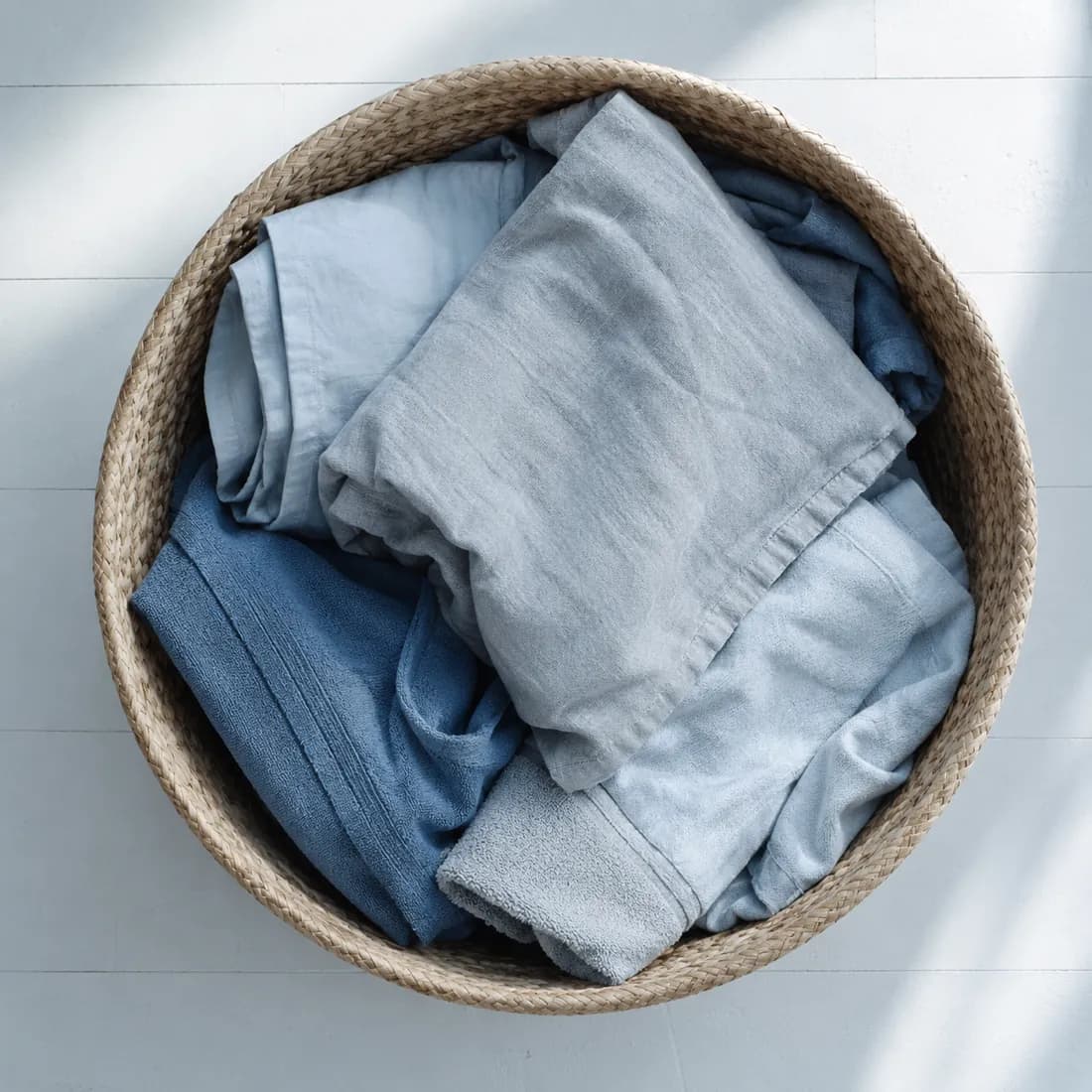
In the basket
5Sits here for half the gap between washes.

In the machine
under 1Sits here for a couple of hours.
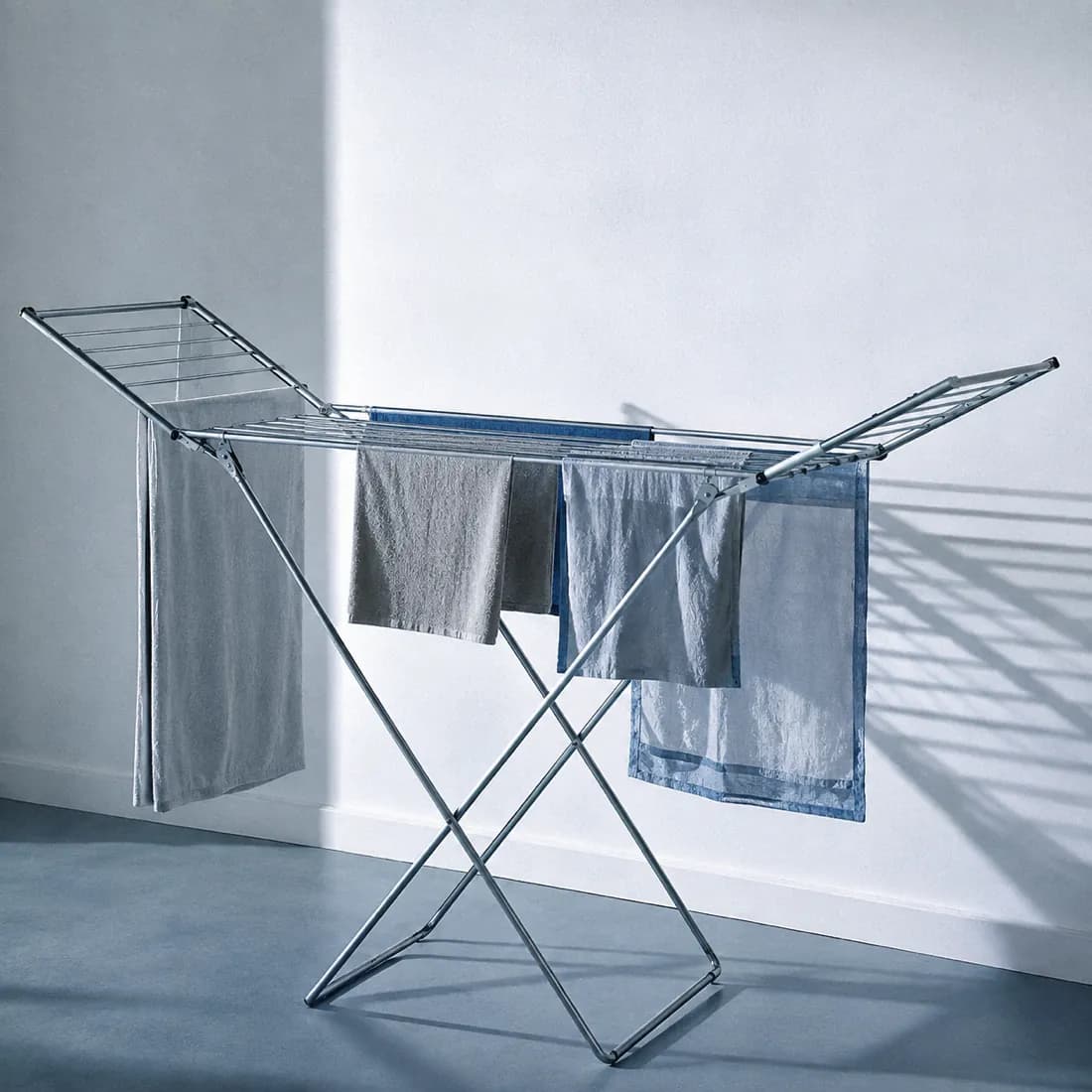
Drying
2Sits here for overnight, on an airer.
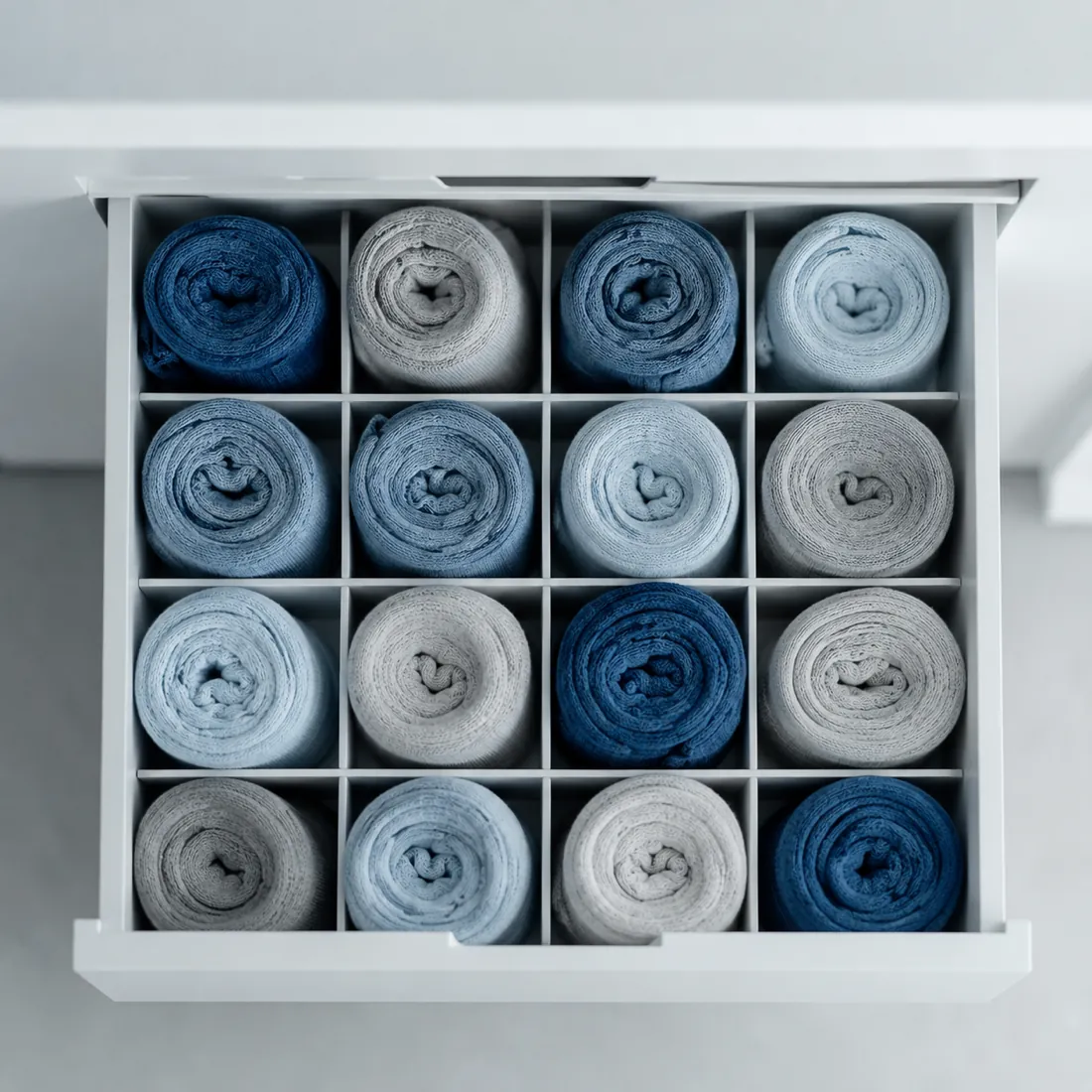
In the drawer
8Sits here for until you reach for it.
The only stack you can wear.
Two ways out
Buying more is the obvious route. It is rarely the cheap one.
Most tools that answer “how many” push you towards buying, because buying is the only lever they know about. The real lever is the wash interval, and it is usually worth more than five extra pairs.
So both routes get shown, with what each one costs, and you pick.
Route one
Buy more pairs
+6
more pairs in the drawer to reach the same safety margin.
- Whatever those pairs cost you, plus the drawer space.
- The wash still happens once a week, so the slow stage stays slow.
- You get through the same number of pairs a year either way — you just spread the wear.
Route two
One more wash a week
−6
fewer pairs required, from 14–16 down to 9–10.
- About forty minutes of your week, most of it not hands-on.
- Halves the time a pair sits in the basket, which is the biggest stage.
- Nothing to buy, nothing to store.
The loop, as it looks
A laundry room, not a catalogue.
Nothing here is for sale and nothing is being advertised. These are the five places your pairs spend their week.




Three plans, nothing else to buy
A number is easy to doubt. The diagram is what convinces.
Free gives you the range and the honest caveats. Paid gives you the picture of where those pairs are sitting, and the comparison that often saves you buying anything at all.
Free
50 credits a month$0 / month
Includes VAT at 20 percent.
The number, and an honest list of what the number cannot know.
- Three runs a month
- Your steady-state range, as a range
- The full list of what this model cannot know
- A stock card you can save, marked as a free-tier card
Turnover
360 credits a month$6 / month
or $58 a year. Includes VAT at 20 percent.
The diagram that explains where the number came from.
- Unlimited runs
- The five-stage cycle diagram, with pairs on every stage
- What-if: one more wash a week, side by side with buying more
- Top-up timing worked from your wear rate
House
1250 credits a month$18 / month
or $173 a year. Includes VAT at 20 percent.
One machine, several people, one honest total.
- Everything in Turnover
- Up to eight people sharing one machine and one calculation
- Extra garment categories beyond socks
- Winter and summer drying profiles side by side
The monthly allowance is a service usage limit. It is not money, not stored value, not redeemable for cash and not transferable. It resets each period and does not carry over; there are no top-up packs and no stored balance. If you run out, the only route is to move up a plan. Cancel at any time, in the same number of steps it took to subscribe.

Questions
The ones that actually get asked.
Including the two we would rather answer here than have you wonder about: whether we push a subscription at you, and whether the number is simply too big.
Ask something elseDo you recommend a subscription that tops the drawer up for me?
No. This site does not recommend any subscription service, any retailer and any brand, and it never will. It has no purchasing route, no affiliate links and nothing to click through to.
What it does is work out a quantity and tell you roughly when the set will need attention. We work out how many. Where you get them is not our business.
It says I need fifteen pairs. Is that not far too many?
It is more than most people expect, and the reason is the part nobody counts. At any ordinary moment a chunk of what you own is not in the drawer: a pair on your feet, several in the basket, sometimes a load in the machine, and whatever is still damp on the airer.
Owning fifteen and being able to wear nine at any given time are the same situation described two ways. The dial separates them so you can see it.
And if the figure looks high, the answer is not necessarily to buy. One extra wash a week usually removes more pairs from the requirement than buying five more adds to the drawer. The what-if panel puts both routes next to each other with their costs.
Where do the numbers come from? Does an AI make them up?
No. The arithmetic is a steady-state model of a loop and it runs in your browser, from the inputs you set. Occupancy of each stage is the flow rate multiplied by the time a pair spends in that stage; the requirement is the consumption across one wash interval plus the lag before clean laundry comes back, plus a buffer.
A language model is used for one narrow job: turning a sentence like "laundry every Sunday, office five days, gym three times" into the parameters. The moment those parameters exist, the model is out of the loop and the arithmetic runs again from scratch. Same inputs, same output, every time.
Every figure is a range, never a single number, because the inputs it depends on are not knowable to the decimal.
What data do you collect, and do you train on it?
This service accepts no images at all. There is nothing to upload and no upload control anywhere on the site.
If you use the account features we hold your email address, a hashed password and your saved laundry profiles. Your laundry habits are not used to train models, ours or anyone else’s. We use only aggregate, non-identifying signals such as error rates to keep the service working.
You can export or delete everything from your account, and the retention periods and deletion route are set out on the privacy page.
How accurate is it?
It is accurate about the loop and honest about everything else. The model does what it says: given a wash frequency, a wear rate and a drying lag, it works out the stock level at which the drawer stops emptying.
What it cannot know is whether the wash you planned for Sunday happens on Sunday, how long your own pairs last, or which weeks will not look like a normal week. Those are listed in full alongside every result, on every plan including the free one, and they are never covered by the free-tier card marking.
Nothing here is professional advice, and no assurance is given that stocking to these figures prevents you running out.
Can I cancel, and what happens to my money?
You can cancel at any time from the billing page in your account, in the same number of steps it took to subscribe. No phone call, no email, no retention flow.
You have a statutory 14-day right to cancel under the Consumer Contracts Regulations 2013. If you asked us to start straight away and acknowledged that you would lose that right, it ends when the service begins; if we did not take both of those acknowledgements properly, the right stands.
We also voluntarily give a fresh 14-day cancellation window after every renewal, and we send a separate renewal reminder before each charge. Full detail is on the cancellation and refunds page.
What happens to my monthly allowance if I do not use it?
It resets at the start of each period and does not carry over. There are no top-up packs and no stored balance to buy; the allowance is a service usage limit, not money, not stored value, not redeemable for cash and not transferable.
If you run out before the period ends, the only route is to move up a plan.
Is there a minimum age?
You need to be 13 or older to hold an account, and between 13 and 17 you need a parent or guardian to agree on your behalf. Billing requires an adult.
Find out what your loop actually needs.
It takes about a minute, there is nothing to upload, and the free plan gives you the range and every caveat that comes with it.
We work out how many. Where you get them is not our business.